

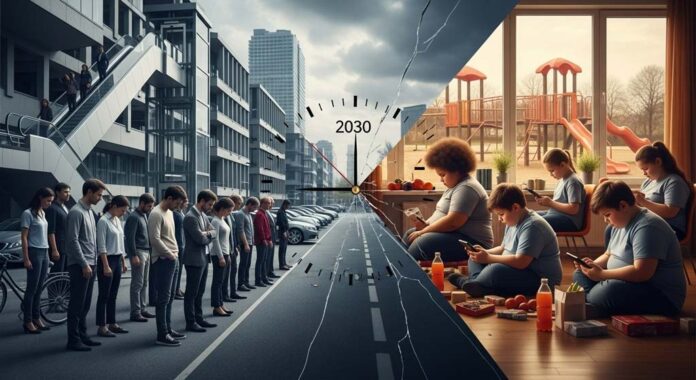

The physical inactivity and obesity crisis confronts us with uncomfortable evidence about modern life. Whilst working on an integrated health, wellness, and sport development framework, I pulled together two comprehensive studies I’d recently published on BeSund.
The first examined physical activity trends showing the world is getting less active despite the fitness boom. The second revealed that the global childhood obesity crisis forecasts 360 million children with obesity by 2050.
Reading both studies side by side exposed something I hadn’t fully grasped. These aren’t separate health problems competing for attention and resources. They’re two faces of the same crisis, feeding each other in ways that threaten current and future generations alike.
What struck me hardest was the timeline. We have until 2030 to prevent this from becoming irreversible across entire populations. After that deadline, we shift from prevention to damage control. BeSund provides evidence-based health and wellness information. This post brings that research to Nursing Daddy readers who want to understand what’s really happening to human health globally.
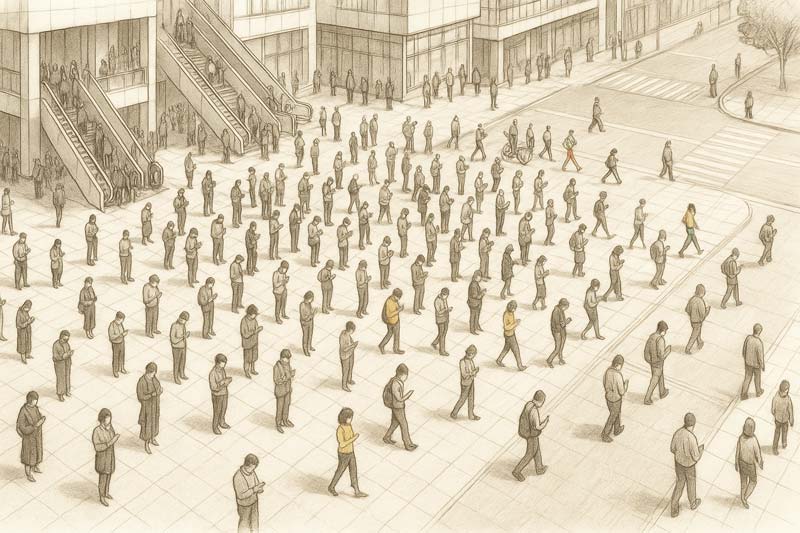
Nearly Two Billion Adults Fail to Meet Minimum Activity Levels
In 2022, 31.3% of adults worldwide weren’t meeting basic physical activity recommendations [1]. That translates to approximately 1.8 billion people not getting enough movement for essential health maintenance.
The World Health Organization sets a modest target: 150 minutes of moderate-intensity activity weekly [3]. Roughly half an hour on five days. Yet nearly one-third of global adults fall short.
Compare this to the year 2000, when 23.4% were insufficiently active. The increase isn’t marginal. We’ve added 900 million inactive adults in just over two decades. Projections suggest 34.7% will be inactive by 2030 if current trends continue. The World Health Assembly targeted a 15% reduction in disease rates between 2010 and 2030. Most countries won’t come close [1].
Regional patterns reveal where the crisis accelerates fastest. High-income Asia Pacific and South Asia show the highest inactivity rates. South Asia exemplifies the acceleration: inactivity rose from 22.4% in 2000 to 45.4% in 2022, more than doubling in 22 years. Sub-Saharan Africa and Oceania maintain the lowest rates. Yet, six of nine global regions are moving in the wrong direction [1].
The map above illustrates these geographic disparities starkly. Darker regions aren’t just slightly worse. They’re experiencing rapid deterioration that overwhelms health systems designed for different disease patterns.
Women consistently face higher inactivity rates than men across most regions. Globally, 33.8% of women versus 28.7% of men fail to meet activity guidelines. That 5-percentage-point gap widens dramatically in South Asia to 14 points, with female inactivity at 52.6%. Cultural restrictions, safety concerns, family responsibilities, and limited facility access create barriers that men don’t face to the same degree [1].
East and Southeast Asia buck this pattern. Male inactivity exceeds female rates there, suggesting gender patterns reflect local contexts rather than biological destiny. China shows an 8-percentage-point difference in favour of women [1]. These exceptions prove that social and cultural factors drive the gender gap, not unchangeable biological differences.
Age compounds the problem. Physical inactivity increases sharply after age 60 across all regions. Prevalence often exceeds 50% among those over 80 [1]. As global populations age rapidly, the combination of demographic shift and activity decline threatens to overwhelm health systems with preventable chronic disease [4]. This pattern forms one half of the physical inactivity and obesity crisis affecting populations worldwide.
Childhood Obesity Triples as 174 Million Children Affected
Between 1990 and 2021, obesity among children and adolescents aged 5-24 increased by 244%. The prevalence jumped from 2.0% to 6.8% in three decades. By 2021, 93.1 million children aged 5-14 and 80.6 million adolescents aged 15-24 were living with obesity [2].
These aren’t simply children carrying extra weight. Obesity in childhood constitutes a chronic disease with immediate impacts. Young people with obesity experience metabolic-associated fatty liver disease (fat build-up in liver cells), hypertension (high blood pressure), type 2 diabetes (a condition where the body cannot properly regulate blood sugar), and reproductive dysfunction [5,6]. These conditions were once considered adult diseases. Now they appear in children.
Geographic patterns mirror but intensify adult inactivity trends. North Africa and the Middle East show the highest childhood obesity prevalence. Countries like the United Arab Emirates and Kuwait report rates exceeding 50% in some age groups. Southeast Asia, East Asia, and Oceania experienced the fastest relative increases since 1990, transforming weight profiles across entire populations [2].
The “obesity transition” marks a critical threshold. This occurs when obesity becomes more prevalent than overweight within a population. By 2021, females in Australasia and high-income North America had crossed this threshold. Multiple countries in Oceania and the Middle East followed.
This transition fundamentally alters required public health responses, making it a defining characteristic of the physical inactivity and obesity crisis. Prevention-focused strategies must shift to intensive clinical management combined with prevention [2].
Last chance for prevention
The timeline above shows where we’re heading. The steepest increases lie immediately ahead, not behind us.
Why 2030 Marks the Deadline for the Physical Inactivity and Obesity Crisis
Current trends project devastation if immediate action isn’t taken. Global physical inactivity will reach 34.7% by 2050, with high certainty that the World Health Assembly’s 2030 target won’t be met. Most countries and regions move in the wrong direction. Posterior probabilities (statistical likelihood based on observed data) fall below 0.01 for meeting the 2030 target [1].
Childhood obesity forecasts paint a worse picture. By 2050, approximately 360 million children and adolescents aged 5-24 will live with obesity. This represents a 120.7% increase from 2021 levels. The absolute increase in obesity prevalence between 2021 and 2050 will exceed the growth between 1990 and 2021, even though the relative percentage change is lower [2].
This acceleration reflects populations transitioning from overweight to obesity rather than from normal weight to overweight. That shift signals something fundamental about how weight distributions change once thresholds are crossed.
The period between 2022 and 2030 emerges as critical across both crises. For physical inactivity, continuing current trends through 2030 will entrench patterns that become exponentially harder to reverse [1]. For childhood obesity, substantial increases are forecast between 2022 and 2030 [2]. This eight-year window represents the last opportunity to prevent obesity from becoming established across entire populations.
After 2030, many low- and middle-income countries face overwhelming public health emergencies. High population numbers combine with rapidly rising obesity prevalence [2,7]. Understanding the urgency of the physical inactivity and obesity crisis becomes essential for coordinated action. The failure to include overweight and obesity targets in the United Nations Sustainable Development Goals for 2015-2030 represents a missed opportunity for coordinated global action [8].
Young males aged 5-14 are forecast to become the first global population group where obesity exceeds overweight by 2040 [2]. At that point, obesity prevalence reaches 16.5% compared to 12.9% who are overweight. This fundamental shift in weight distribution will persist throughout their lifespans, affecting their health from childhood through to old age.

What Does the Physical Inactivity and Obesity Crisis Cost in Lives and Money
Physical inactivity increases the risk of cardiovascular disease (heart and blood vessel conditions), stroke, type 2 diabetes, several cancers, and mental health conditions [3,9]. It negatively affects cognitive function (brain processing abilities), contributes to weight gain, and accelerates functional decline with ageing.
The global burden of disease attributable to insufficient physical activity includes substantial preventable mortality (early death) and disability-adjusted life-years (years lost to ill health or early death) [10].
Childhood obesity carries immediate health risks extending far beyond appearance. Young people with obesity experience higher rates of asthma, joint problems, sleep apnoea (breathing interruptions during sleep), psychological issues, and metabolic complications [5,11].
What’s more concerning is that childhood obesity rarely resolves. Most affected young people carry excess weight into adulthood, along with dramatically elevated risks [12,13,14]. Cardiovascular disease, cancer, kidney disease, and premature death become likely as early as young adulthood.
For adolescent females, obesity during childbearing years creates intergenerational cycles. In-utero effects (impacts during pregnancy) predetermine the health of the next generation [15,16]. Children born to mothers with obesity face higher risks of obesity themselves, perpetuating the crisis across generations.
Inactivity
+
Obesity
The diagram above shows how these health impacts interconnect and compound each other.
Economic burden compounds human cost. Estimates suggest the total economic impact of overweight and obesity will exceed 3% of global gross domestic product by 2060 [17]. This includes direct medical costs, productivity losses, disability payments, and premature mortality.
For low- and middle-income countries already struggling with limited health budgets and competing priorities, the physical inactivity and obesity crisis threatens to overwhelm health systems and derail development progress [7,18].
Where the Crisis Hits Hardest Across Regions and Demographics
Both crises demonstrate profound inequalities across geography, gender, and age. High-income countries generally show higher obesity prevalence, but some also demonstrate successful reduction in physical inactivity through comprehensive policy approaches [1,2].
Western European countries lead in reversing inactivity trends. Twelve nations are on track to meet the 2030 target through multi-sectoral policies [1,19]. These policies address active transportation (walking and cycling for travel), urban design that encourages movement, and access to recreation. Success stories exist. They just remain exceptions rather than the rule.
Rapid economic development without attention to obesogenic environments (settings that promote weight gain) has produced the fastest increases across parts of Asia, the Middle East, and Latin America [1,2,20]. These regions face a “double burden.” Persisting undernutrition exists alongside escalating overnutrition, complicating public health responses and requiring integrated solutions [21,22].
Gender inequalities manifest differently across regions. In South Asia, the Middle East, and Latin America, women face substantially higher inactivity rates and obesity prevalence than men [1,2]. Context-specific approaches must account for local social norms whilst promoting equitable access to physical activity opportunities [23].
The age dimension reveals another pattern. Whilst physical inactivity rises sharply after age 60, childhood obesity increasingly affects younger children more severely than adolescents [1,2]. This suggests fundamental shifts in weight distribution that will persist throughout lifespans.
Low- and middle-income countries present critical opportunities. Many regions in Asia, Africa, and parts of Latin America must simultaneously address persistent undernutrition whilst managing rapidly rising obesity rates. Nutritional interventions must balance multiple, sometimes conflicting priorities.
The physical inactivity and obesity crisis manifests differently across income levels, requiring targeted approaches. Get it right in these regions now, and you prevent the severe health and economic impacts already affecting other regions [2].
Reversing the Physical Inactivity and Obesity Crisis Through Evidence-Based Action
The evidence for regular physical activity is unequivocal. It reduces risks across the spectrum of non-communicable diseases whilst improving mental health, cognitive function, and quality of life [3,9]. For children and adolescents, physical activity supports healthy growth and development, prevents excess weight gain, and establishes patterns that persist into adulthood [24,25].
Successful examples demonstrate what comprehensive approaches achieve. China’s DECIDE-Children programme reduced childhood obesity through school-based interventions engaging families, teachers, and communities [26]. The Amsterdam Healthy Weight Approach combined urban planning, pricing policies, and community engagement to reverse rising obesity trends [27].
These successes share common elements: multi-sectoral coordination, sustained political commitment, adequate resourcing, and adaptation to local contexts. No single strategy works universally. But coordinated actions addressing both environmental factors and individual behaviours offer the best chance of reversing current trends in the physical inactivity and obesity crisis.
The intervention pathway shown above illustrates how systematic investment transforms population health. Each stage builds on the previous one, creating compounding benefits.
The window for effective action narrows rapidly. By 2030, many populations will have transitioned to obesity predominance, requiring far more intensive and expensive clinical interventions alongside prevention. Populations remaining overweight-predominant, including much of Africa and parts of Asia, present critical opportunities for prevention-focused strategies [2].
Different positions on the transition continuum require different approaches. Regions where overweight remains predominant benefit most from population-level preventive interventions targeting systemic drivers of weight gain.
Populations already experiencing obesity predominance require clinical management capacity alongside prevention. Healthcare workforce training, treatment options, and preventive interventions for the next generation all become necessary [2].
Sport and physical activity interventions offer cost-effective, scalable solutions addressing both challenges simultaneously. They deliver broader health, social, and economic benefits beyond weight management [28,29]. Every £1 invested in physical activity yields £3-4 in healthcare savings. Prevention-focused strategies offer 10 times better cost-effectiveness than treating established obesity.
The convergence of these crises demands urgent, coordinated responses across all sectors. The evidence for action has never been stronger. The question isn’t whether to invest in promoting physical activity, but how quickly comprehensive programmes can be implemented before the opportunity for prevention is lost.
Sources
[1] Strain T, Flaxman S, Guthold R, et al. National, regional, and global trends in insufficient physical activity among adults from 2000 to 2022: a pooled analysis of 507 population-based surveys with 5·7 million participants. Lancet Glob Health. 2024;12(8):e1232-e1243.
[2] GBD 2021 Adult BMI Collaborators. Global, regional, and national prevalence of adult overweight and obesity, 1990-2021, with forecasts to 2050: a forecasting study for the Global Burden of Disease Study 2021. Lancet. 2025;405(10481):813-838.
[3] Bull FC, Al-Ansari SS, Biddle S, et al. World Health Organization 2020 guidelines on physical activity and sedentary behaviour. Br J Sports Med. 2020;54:1451-1462.
[4] Patton GC, Sawyer SM, Santelli JS, et al. Our future: a Lancet commission on adolescent health and wellbeing. Lancet. 2016;387:2423-2478.
[5] Goran MI, Ball GDC, Cruz ML. Obesity and risk of type 2 diabetes and cardiovascular disease in children and adolescents. J Clin Endocrinol Metab. 2003;88:1417-1427.
[6] Eslam M, Alkhouri N, Vajro P, et al. Defining paediatric metabolic (dysfunction)-associated fatty liver disease: an international expert consensus statement. Lancet Gastroenterol Hepatol. 2021;6:864-873.
[7] Oleribe OO, Momoh J, Uzochukwu BSC, et al. Identifying key challenges facing healthcare systems in Africa and potential solutions. Int J Gen Med. 2019;12:395-403.
[8] Ralston J, Cooper K, Powis J. Obesity, SDGs and ROOTS: a framework for impact. Curr Obes Rep. 2021;10:54-60.
[9] US Department of Health and Human Services. 2018 Physical Activity Guidelines Advisory Committee Scientific Report. Washington, DC: US Department of Health and Human Services; 2018.
[10] Brauer M, Roth GA, Aravkin AY, et al. Global burden and strength of evidence for 88 risk factors in 204 countries and 811 subnational locations, 1990-2021: a systematic analysis for the Global Burden of Disease Study 2021. Lancet. 2024;403:2162-2203.
[11] Buttitta M, Iliescu C, Rousseau A, et al. Quality of life in overweight and obese children and adolescents: a literature review. Qual Life Res. 2014;23:1117-1139.
[12] Twig G, Yaniv G, Levine H, et al. Body-mass index in 2·3 million adolescents and cardiovascular death in adulthood. N Engl J Med. 2016;374:2430-2440.
[13] Furer A, Afek A, Sommer A, et al. Adolescent obesity and midlife cancer risk: a population-based cohort study of 2·3 million adolescents in Israel. Lancet Diabetes Endocrinol. 2020;8:216-225.
[14] Franks PW, Hanson RL, Knowler WC, et al. Childhood obesity, other cardiovascular risk factors, and premature death. N Engl J Med. 2010;362:485-493.
[15] Godfrey KM, Reynolds RM, Prescott SL, et al. Influence of maternal obesity on the long-term health of offspring. Lancet Diabetes Endocrinol. 2017;5:53-64.
[16] Patton GC, Olsson CA, Skirbekk V, et al. Adolescence and the next generation. Nature. 2018;554:458-466.
[17] Okunogbe A, Nugent R, Spencer G, et al. Economic impacts of overweight and obesity: current and future estimates for 161 countries. BMJ Glob Health. 2022;7:e009773.
[18] Willcox ML, Peersman W, Daou P, et al. Human resources for primary health care in sub-Saharan Africa: progress or stagnation? Hum Resour Health. 2015;13:76.
[19] WHO/OECD. Step up! Tackling the burden of insufficient physical activity in Europe. Copenhagen: WHO Regional Office for Europe; 2023.
[20] Popkin BM. Relationship between shifts in food system dynamics and acceleration of the global nutrition transition. Nutr Rev. 2017;75:73-82.
[21] Popkin BM, Corvalan C, Grummer-Strawn LM. Dynamics of the double burden of malnutrition and the changing nutrition reality. Lancet. 2020;395:65-74.
[22] Hawkes C, Ruel MT, Salm L, et al. Double-duty actions: seizing programme and policy opportunities to address malnutrition in all its forms. Lancet. 2020;395:142-155.
[23] Mielke GI, da Silva ICM, Kolbe-Alexander TL, Brown WJ. Shifting the physical inactivity curve worldwide by closing the gender gap. Sports Med. 2018;48:481-489.
[24] Sawyer SM, Afifi RA, Bearinger LH, et al. Adolescence: a foundation for future health. Lancet. 2012;379:1630-1640.
[25] Freedman DS, Mei Z, Srinivasan SR, et al. Cardiovascular risk factors and excess adiposity among overweight children and adolescents: the Bogalusa Heart Study. J Pediatr. 2007;150:12-17.
[26] Liu Z, Gao P, Gao A-Y, et al. Effectiveness of a multifaceted intervention for prevention of obesity in primary school children in China: a cluster randomised clinical trial. JAMA Pediatr. 2022;176:e214375.
[27] Sawyer A, den Hertog K, Verhoeff AP, et al. Developing the logic framework underpinning a whole-systems approach to childhood overweight and obesity prevention: Amsterdam Healthy Weight Approach. Obes Sci Pract. 2021;7:591-605.
[28] WHO. Global action plan for the prevention and control of noncommunicable diseases 2013-2020. Geneva: World Health Organization; 2013.
[29] Swinburn BA, Kraak VI, Allender S, et al. The global syndemic of obesity, undernutrition, and climate change: the Lancet Commission report. Lancet. 2019;393:791-846.